
Here’s Why You Still Call “X” Twitter.
When we say branding is an all-encompassing element that touches every aspect of a business’s identity and presence, we mean it’s not just a logo or a name, but the entire experience and association people have with a brand. And here is a good example of how a simple name change can fundamentally reshape a platform’s strategic potential and user perception.
Now, while Twitter’s branding built iconic recognition over 17 years, it also, in many ways, constrained the platform's perceived identity to text-based social chatter. Below, I’ll break down how X’s open-ended branding facilitates diversification, drawing on strategic, perceptual, and practical dimensions.
After 17 years, it stands to reason why many people continue to call the social media platform “X” by its former name, Twitter. This is largely because Twitter was originally a well-crafted and recognizable concept centered around communication. For example, the name “Twitter“ itself was cleverly linked to the idea of birds chirping and sharing short bursts of conversation, embodied by the term “tweet.”
This simple metaphor immediately conveyed the platform's purpose: quick, light, and social exchanges. The iconic blue bird logo—despite going through small refinements to appear friendlier and rounder—remained a strong visual anchor.
In contrast, the new brand identity, “X,” is more abstract and disconnected from Twitter’s communication-focused origins. The name “X” carries a neutral, open-ended tone that allows room for growth, reinvention, and the introduction of new services beyond microblogging.
However, because “X” does not carry the same ingrained symbolic meaning or emotional connection, many users find it natural to refer to the platform by its well-established original name.
Semantic Flexibility of “X” vs. the Specificity of “Twitter”
The rebranding of Twitter to X in 2023 was a deliberate pivot, transforming the platform from a niche microblogging service into an ambitious “everything app.”
At its core, the name “X” embodies ambiguity and universality—evoking the mathematical unknown, the Roman numeral for infinity, or even the owner of “X”, Elon Musk’s personal affinity for the letter (as seen in SpaceX and xAI)—which inherently invites broader interpretation.
This contrasts sharply with “Twitter,” a term rooted in the light, ephemeral chirping of birds, symbolizing short, casual updates.
Let’s now dive deeper and compare the two, side by side:
1. Symbolic and Perceptual Openness
X as a Blank Canvas: The single-letter name lacks descriptive baggage, allowing users, investors, and partners to project diverse meanings onto it. It signals “limitless possibility” and “the future,” aligning with “X's” vision of a multifunctional ecosystem rather than a siloed tool. For instance, X can fluidly represent social discourse and financial services without cognitive dissonance—much like how
Amazon evolved from books to “everything” under a neutral name.Twitter's Constraints: “Twitter” evoked brevity and informality, which became a double-edged sword. As the platform added long-form posts, video, and live audio (e.g., Spaces), the bird logo and “tweet” terminology felt mismatched, limiting expansion into non-communicative realms like e-commerce or banking. Analysts note this specificity “restricted where Elon Musk wants to go,” tying the brand to a 2006-era identity that no longer fit a 2023+ reality. What do you think?
2. Strategic Enablement of Product Diversification
Easier Integration of New Services: X's vagueness lowers barriers to rolling out unrelated features. Since the rebrand, the platform has introduced payments (via X Payments LLC), expanded video (e.g., long-form uploads rivaling YouTube), and Grok AI integration for real-time insights—services that would clash with Twitter's “microblogging“ ethos. This mirrors successful pivots like Facebook to Meta, but X's neutrality avoids the awkward “Twitter for banking“ framing.
Revenue and Ecosystem Expansion: By shedding Twitter's ad-heavy, tweet-centric model, X can pursue multiple streams (e.g., subscriptions via X Premium, marketplace tools) without retooling the brand narrative. Musk's goal is a “super app“ like WeChat, consolidating communication, transactions, and media; the name X doesn't pigeonhole this, enabling seamless growth. In contrast, Twitter's equity was “synonymous with leftist censorship“ in Musk's view (pre-rebrand), but more critically, its whimsy hindered serious fintech pivots.
3. User and Cultural Adaptation
Fostering Diverse Engagement: On X, content spans politics, archaeology, space photos, and animal adventures in one feed, with users noting it offers “diversity of thought“ and a “marketplace of ideas” unmatched elsewhere. The brand's ambiguity encourages this eclecticism—posts aren't just “tweets” but versatile “posts” or videos, allowing global communities to form around niche topics without the platform feeling like a “town square” only.
Twitter’s Legacy Inertia: While “tweeting” became a verb (a rare branding win), it reinforced a narrow social lens. Post-rebrand, users still say “tweet on X,” highlighting the old name's stickiness—but this very transition proves X’s flexibility: it absorbs the familiarity while layering on new behaviors, like AI-routed feeds for politics vs. creativity.
Comparative Overview: Branding Constraints and Opportunities
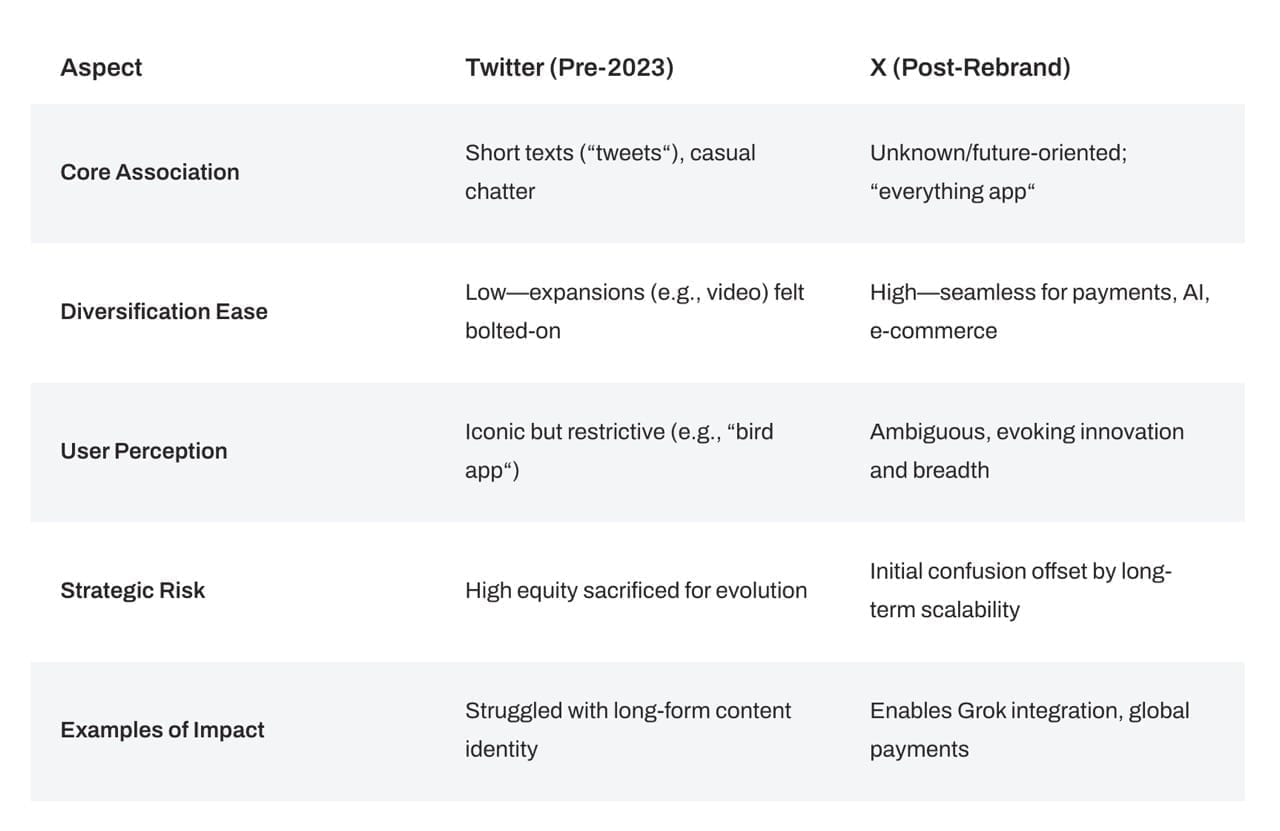
In essence, X’s interpretive openness acts as a “strategic wildcard,” per branding experts, allowing rapid iteration in a competitive landscape (e.g., vs. Threads or TikTok). While the rebrand risked alienating users—many still call it Twitter—it positions the platform for exponential growth beyond social media. This isn't just semantics; it's a bet on adaptability in a world where platforms must evolve or fade.
Finally: So, what should we call posting on X?
“X-ing”? “X-pressing”? “X-creting”? (Okay, maybe not that last one).
Let’s be honest, the whole naming debate is a bit of a circus. It’s easy to get tangled up in the “correct“ terminology and worry about the platform's... vibrant... new reputation.
But here’s the plot twist: your brand is far more than the label for a single action. While you can't control the platform's chaos, you have 100% control over your own voice.
So, stop stressing about the verb and start focusing on the value. In the end, it doesn't matter if you call it “posting,“ “tweeting,“ or “X-claiming your digital territory.”
The real question is: What will you say once you’re there?
CONTENT YOU MAY FIND INTERESTING


SHARE


Subscribe now.
Sign up for our newsletter to get the most interesting stories of the day straight to your inbox before everyone else
ABOUT
Visual Communication Services: Empowering entrepreneurs and businesses to cultivate a cohesive and impactful brand identity that elevates their lifestyle and bottom line.
Created with ©systeme.io• Privacy policy • Terms of service